Investment desk
Own a piece of the corridor. Paid in USDT, proven by the pipeline.
Every tokenization platform has the same weakness: it does not operate the asset, so investors have to trust third-party reporting. G9x already runs the shipments. The pipeline that moves the cargo is the same one that evidences the return.
No offering is open. G9x Capital is described here as a product mechanism. Legal sign-off is required before any real offering opens, and nothing on this page is an offer, a solicitation, or investment advice.
Why this is not like other tokenized assets
The difference is not the token. It is who holds the evidence.
Every other platform
Does not operate the asset.
So the investor’s evidence is whatever the originator chooses to report — a spreadsheet, a quarterly PDF, a number typed by the party being paid on it.
G9x Capital
Already runs the shipment.
So the evidence is the audit trail the cargo itself produced — the same milestones, proof of delivery and paid invoices the customer is billed against.
How it works
Curated issuance, human-verified money.
The desk vets and structures; finance verifies and releases; compliance clears. It is a control tower for assets, built the same way as the one for cargo — and for the same reason.
- 01
Desk-vetted assets
Originators apply; the Tokenization Desk vets ownership, earnings history and compliance before anything is offered. Curated issuance — never a self-service listing.
- 02
Invest in USDT
Subscribe to an offering and send USDT (TRC-20 or ERC-20) to the platform address. A finance officer verifies your transaction on-chain before tokens are issued — no card, no custody of your keys.
- 03
Earn as it earns
Asset income — charter hire, leasing fees, completed-voyage revenue — is distributed pro-rata to token holders in USDT. The math is deterministic; the payout is human-approved.
- 04
Sell anytime
List your tokens on the internal order book to KYC-cleared buyers. Liquidity depends on buyers and price is bid/ask — we say so plainly, because that is the honest version of “sell anytime”.
Asset classes
What can be tokenized.
Ranked by how short the tenor is and how much of the performance the pipeline can already evidence. Short-tenor shipment finance and container fleets come first precisely because the whole loop — raise, operate, distribute, redeem — can be proven in weeks.
Cargo voyage finance
Fund a booked shipment; earn a fee or profit share on its service revenue. Two to twelve weeks.
Container fleet
A pool of owned or leased boxes earning per-trip and per-day leasing income. One to five years.
Vessel or vessel share
Charter hire and voyage income from a vessel operated by an onboarded shipping line.
Warehouse & terminal capacity
Storage and handling income from an onboarded facility on the corridor.
Asset class · Vessel
A vessel, divided into a million tokens.
A ship run by an onboarded line. It earns, the pipeline proves it, holders are paid their share.
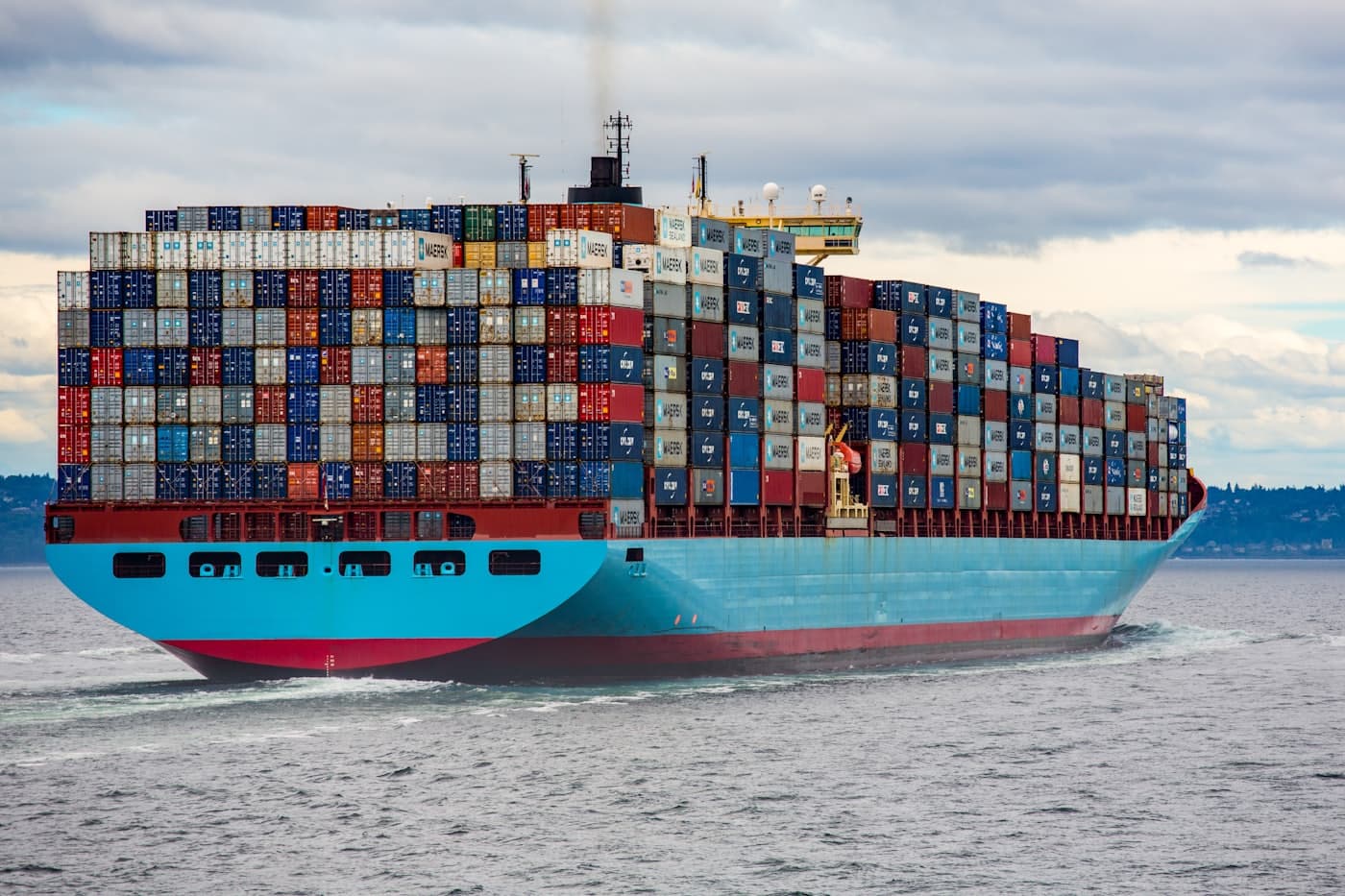
Specimen · G9X-VSL-0001
- Tokens in issue
- 1,000,000
- Holding shown
- 2% · 20,000
Earns
Charter hire and voyage income, paid in USDT.
Tenor
5–20 years.
Evidence
Port calls, proof of delivery, paid invoices.
Stage
Later wave — marine and registry law clears first.
The arithmetic
Both assets pay the same way.
One calculation, whatever the asset: what it distributes × what you hold. The lit cells above and below are this 2%.
The asset earns, in a period
100,000 USDT
You hold
2% of tokens
You receive
2,000 USDT
| Line | Figure | |
|---|---|---|
| Income for the periodfrom paid invoices only | 100,000 USDT | |
| Tokens in issuefixed at issuance | 1,000,000 | |
| Income per tokensame for every holder | 0.10 USDT | |
| Your holding2% of the asset | 20,000 tokens | |
| Your distribution, paid in USDTreleased by a finance officer, tx hash recorded | 2,000 USDT |
Illustrative mechanics — not a forecast, an indication of returns, or an offer. This shows how a distribution is split, not what an asset will earn. Returns are variable, and an asset can earn nothing.
Asset class · Container fleet
A box pool, divided the same way.
A pool of containers earning on every shipment that uses it. Utilisation is measured as the boxes move, not reported each quarter.

Specimen · G9X-BOX-0002
- Tokens in issue
- 1,000,000
- Holding shown
- 2% · 20,000
Earns
Per-trip and per-day leasing income, paid in USDT.
Tenor
1–5 years.
Evidence
Gate-in, gate-out and delivery events.
Stage
First wave — the whole loop proves in weeks.
How the evidence is produced
Cargo moves, the pipeline records it, a paid invoice becomes income.
Four stages, each tagged with the artefact that proves it — and the last one tagged human-released, because a person moves the money.
- 01
The shipment runs
A real voyage, container fleet or facility operates on the G9x pipeline — legged, booked and executed like any other cargo.
evidence: Milestone events
- 02
The pipeline proves it
Gate-in, transship, delivery and proof-of-delivery are written append-only as they happen. Nobody types a performance figure into a form.
evidence: Proof of delivery
- 03
A paid invoice becomes income
Income is imported only from invoices that were actually paid — never from invoices merely issued. The same invoice can never be imported twice.
evidence: Paid invoice
- 04
You are paid pro-rata
Income is split across token holders by an append-only holdings ledger, computed in code. A finance officer releases the USDT.
human-released
The income funds the next move, and the loop closes.
The promises, completed
What each claim actually commits us to.
Three sentences that are easy to say loosely. Here is the version we are willing to be held to.
“Earn as much as you hold”
Income is distributed pro-rata against an append-only holdings ledger, computed deterministically in code rather than by hand or by a model. What it earns depends entirely on how the asset performs — there is no fixed return, and a fixed return would be a different financial product with different law attached.
“Sell anytime”
Tokens can be listed at any time on an internal order book open to KYC-cleared buyers. Whether they sell, and at what price, depends on there being a buyer — it is bid and ask, not a redemption at book value. We would rather say that than imply liquidity we do not underwrite.
“Backed by real assets”
The asset is real and it is already running on the pipeline that produced this platform’s audit trail: voyage milestones, proof of delivery and paid invoices are the performance feed. Income is imported only from invoices that were actually paid.
Separation of duties
Three functions, three different people.
The structural protection is not a promise of good behaviour — it is that no single person holds enough of the process to complete a transaction alone.
The Tokenization Desk
Vets the asset and structures the offering. It cannot confirm funds and it cannot clear an investor.
Platform Finance
Verifies each USDT transfer on-chain and releases distributions. It cannot structure an offering or clear an investor.
Compliance & Trust
Clears investors and screens jurisdictions. It cannot structure an offering or move money.
Register your interest.
We will tell you when the desk opens, what jurisdiction it opens in, and what clearance it requires. We will not send you an offering before it is legal to.
Returns are variable, from real asset performance — never guaranteed. Investing requires KYC clearance (manual, sanctions-scoped). All USDT movements are verified by a human before any token moves, and the token registry is append-only and audited. Legal sign-off is required before any offering opens.