
Middle East corridors · north–south · west–east
One cargo request.
A plan you can actually compare.
AI-native by construction — and the only tokenization desk that operates what it tokenizes.
G9x is a trade and logistics control tower. You submit one request; we decompose it into road, rail, sea, air, port, customs, warehouse and insurance legs, source them from a vetted provider network, normalize what comes back, and hand you comparable route plans to approve and book.
- Road
- Rail
- Sea
- Air
- Port
- Customs
- Warehouse
- Insurance
- specialist roles
- 17specialist roles
- transport & service modes
- 8transport & service modes
- pipeline stages, end to end
- 9pipeline stages, end to end
- integrations, each with a manual fallback
- 10integrations, each with a manual fallback
- of actions immutably audited
- 100%of actions immutably audited
The product
Say what you want to do. The agent does the operational work.
This is the actual entry point, not a mock-up of one. Type an instruction and it routes to the workflow that handles it, carrying your words through sign-in so the agent picks them up authenticated — as your role, with your role’s masking.
press enter — your words carry through sign-in
Cargo owner
agentMundra → Tashkent · 2×40HC · normalized USD
outliers flagged · provider margin sealed
The corridors
Two corridors cross the Middle East. We operate the crossing.
North–south, the Caspian down to the Gulf and the Arabian Sea. West–east, the Mediterranean through to Central Asia and China. Plenty of operators run one axis — the scarce thing is turning cargo off one onto the other under a single request, a single document set and a single audit trail.
The two axes
2 axes4 lanes14 legs2 interchanges3 land bridges
Plenty of operators run one axis. The scarce thing is the crossing — handing a customer a single request that turns off one axis onto the other, with one document set and one audit trail across every customs regime in between. That interchange is what G9x operates.
Who we serve
Four organisations, four different views of the same shipment.
What you see is governed by your role, and it is the API that governs it — not the interface. No party can reach another party's commercials.
Cargo owners & traders
Submit once. Compare real plans. Book with confidence.
Describe one shipment in plain words. It is decomposed into legs, sourced from providers eligible for each lane and mode, normalized into one currency, and returned as comparable route plans — cheapest, fastest, balanced. You see your total, not the moving parts.
Start a requestLogistics providers
Receive only the RFQs you are eligible for. Quote on your terms.
Your capability profile — modes, countries, equipment, facilities, lanes — decides which RFQs reach you. You price a masked brief, upload documents against the legs you are assigned, and record milestones with proof. What you quote stays yours.
Join the networkFreight forwarders & 3PLs
Run your customers under your own brand, with your margin protected.
Serve your customers on a portal carrying your brand name, logo and colour. Bundle multimodal services, set your own price, and keep the markup sealed — shown to neither your customer nor the carriers underneath.
Talk to usInvestors
Own a piece of the corridor. Paid in USDT, proven by the pipeline.
Assets are vetted by the Tokenization Desk before anything is offered — never a self-service listing. You subscribe in USDT, a finance officer verifies the transfer on-chain before tokens are issued, and income is distributed pro-rata as the asset earns.
Explore G9x CapitalTokenized logistics assets,
proven by the pipeline that runs them.
- Desk-vetted issuance
- USDT-settled
- Pro-rata, computed in code
- Human-released payouts
Every other platform has to take the originator’s word for how an asset performed. G9x operates the asset, so the proof is the audit trail the cargo itself produced.
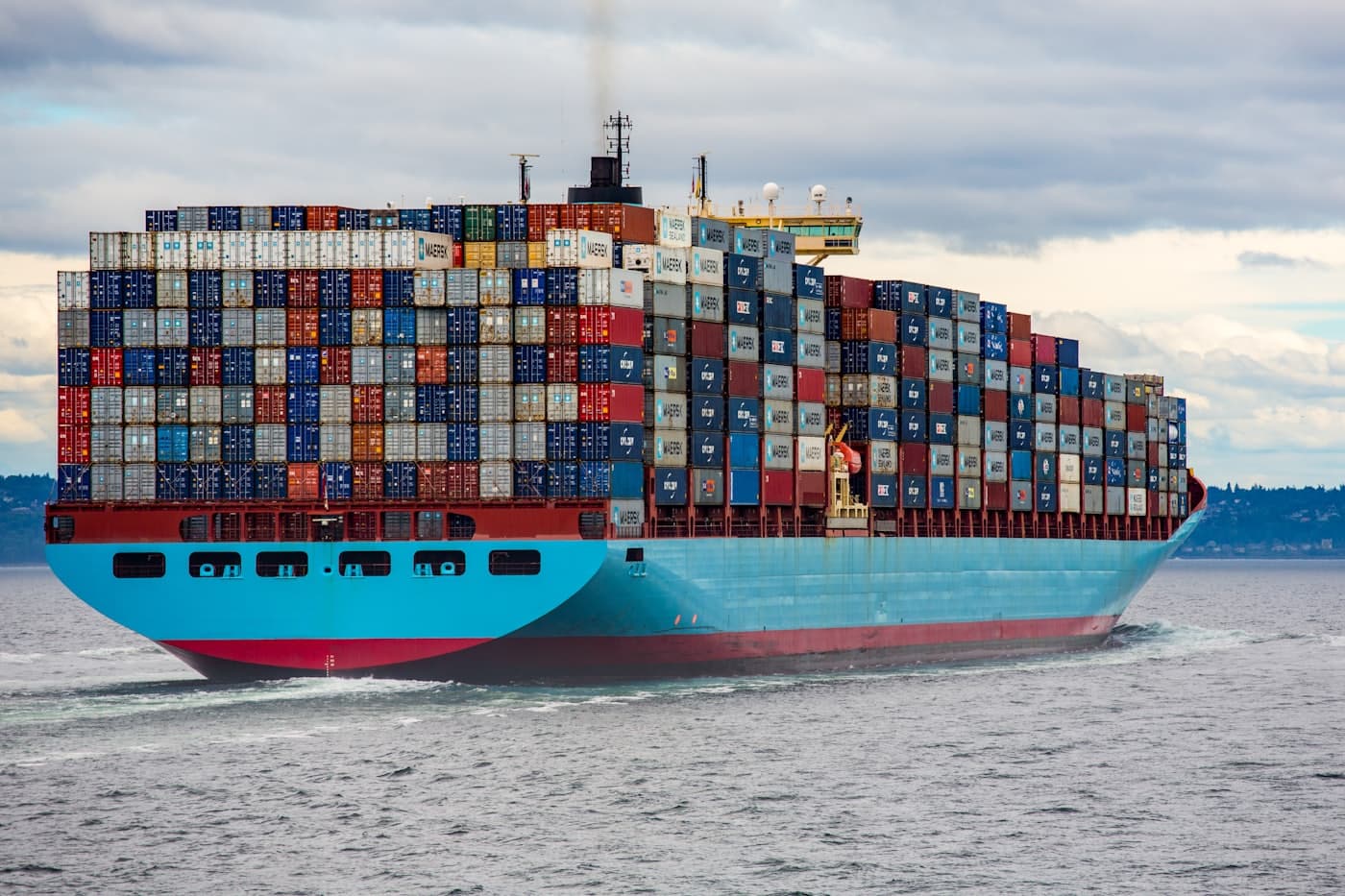
Specimen · G9X-VSL-0001
2 of 100 cells lit = a 2% holdingwhat it pays
Illustrative stock photography — not a G9x-operated asset, and no offering is open.
The asset earns, in a period
100,000 USDT
You hold
2% of tokens
You receive
2,000 USDT
Illustrative mechanics — not a forecast, an indication of returns, or an offer. This shows how a distribution is split, not what an asset will earn. Returns are variable, and an asset can earn nothing.
No offering is open
G9x Capital is described here as a product mechanism. Legal sign-off gates any real raise, returns are variable and never guaranteed, KYC clearance is required, and every USDT movement is verified by a person before any token moves.
How it works
From a sentence to a booked, tracked shipment.
Nine stages, first-class in the schema, the API and the interface. Every transition is a state change, and every state change is written to an append-only audit log with the actor and the old and new values.
- 01Cargo Request
- 02Legs
- 03RFQs
- 04Quotes
- 05Route Plans
- 06Booking
- 07Shipment
- 08Documents
- 09Finance
01
Describe your shipment
What to move, from where, by when — in plain words. Submit it and the request reaches the Control Tower.
02
We dispatch the RFQs
Your request is split into legs and sent only to providers eligible for each lane, mode and licence.
03
Compare normalized plans
Every quote is converted to one currency, outliers are flagged, and the result is built into route plans you compare side by side.
04
Approve, book & track
Pick a plan, approve the money and compliance, and the corridor runs to delivery — every step audited.
What we do
Seven clusters, one spine.
G9x is organised around the pipeline that runs a shipment. Each cluster owns one part of it — and none of them can see what the others are contractually bound to keep private.
How we’re built
Three answers to the only question that matters: why trust this with your cargo?
The operating model, the autonomy policy and the confidentiality substrate. Pick the one you actually came to check.
A marketplace hands you a price. A control tower hands you a plan.
Multi-jurisdiction corridor freight is not a catalogue. Disintermediated self-service was considered and rejected: it cannot protect the commercial confidentiality these corridors run on, and it cannot keep sanctions-sensitive decisions in human hands.
You are quoted one all-in total
A published route plan carries a single customer total. The legs underneath it, what each provider charged, and what G9x earns are not part of what you are shown — you compare plans on the number you will actually pay.
G9x is paid a fee on the sourced cost
We are paid a fee calculated on the cost we source from the provider network, added to that cost to form your total. We are not paid by providers, so nothing steers an RFQ toward one carrier over another.
Providers pay nothing to be here
There is no listing fee, no subscription and no paid placement. Which providers receive an RFQ is decided by capability profile — modes, countries, equipment, facilities, lanes — and nothing else.
Forwarders keep their own markup
A forwarder sets its own price on top and keeps it. That markup is visible to the forwarder alone — hidden from its customer and from the carriers underneath.
Invoicing and payment are manual, by design
Invoices are raised and payments recorded by a person under legal review. There is no automated collection, escrow, wallet or FX until legal sign-off.
The agents do the work. You approve what matters.
Every role can instruct an agent in plain language, and that agent carries operational pipeline work end to end — masked and audited, acting as one specific user. Four decisions never leave a human’s hands.
Payments
Invoices and payouts are drafted; a person releases the money.
Trade compliance
Sanctions, KYB and route screening clear or hold under legal review.
Proof of delivery
A leg turns delivered only on physical proof — never an agent’s word.
Plan approval
Which route plan to book is the customer’s commercial choice alone.
Confidentiality is not a setting. It is where the data lives.
Masking is enforced at the data-access layer, so it holds in authenticated views, in signed public links, and for an agent acting on a role’s behalf. These are the constraints the platform is built from, not features layered on top.
Masked by construction
Competitor quotes, private finance and margin are sealed at the data-access layer — for humans and agents alike, in authenticated views as well as public links.
Every action audited
Each status change, document action, quote edit, payment and override is logged append-only with the actor and old/new values.
No god-mode agent
An agent always acts as one specific user, inheriting exactly that role’s permissions and masking. There is no elevated agent identity.
Deterministic core
Eligibility scoring, quote normalization, margin calculation, masking and every state transition stay code. Agents decide what to do; services do it and emit the audit record.
Resilient integrations
Ten external adapters — tracking, schedules, rates, geocoding, KYC/KYB, sanctions, doc-gen, payments, notifications, map/ETA — each degrade to a documented manual mode.
Role-first by design
Permissions come from the RBAC matrix and are enforced as server-side policy. What you see is governed by your role, never by what the UI chooses to hide.
Questions
The things buyers ask first.
Is G9x a marketplace?
No — and the alternative was explicitly considered and rejected. A marketplace hands you a price; a control tower hands you a plan. G9x dispatches RFQs to eligible providers, normalizes the quotes, and publishes comparable route plans you approve. Disintermediated self-service is not the product.
Why is there no instant rate on this page?
A multimodal move across these corridors is not a single catalogue price — it is a chain of sourced legs across several jurisdictions — and publishing rates publicly would expose provider commercials we are contractually bound to seal. Real quotes come back from real providers, get normalized to one currency, and become route plans — usually within hours, not days.
What stays in human hands?
Money, and sanctions and trade compliance. Agents draft invoices, payouts and risk screens and queue them; a person releases the money and clears the screen under legal review. Proof-of-delivery and the final plan choice are human too.
How do you stop a provider seeing a competitor’s quote?
The API never returns it to that role. Masking is enforced at the data-access layer rather than in the UI, so it holds in authenticated views, in public shared links, and for an agent acting on that role’s behalf.
Can forwarders use their own brand?
Yes. Freight forwarders run customer cargo under their own brand name, logo and accent colour, with their own pricing; the markup is hidden by construction from both the customer and the carriers.
What does the AI actually do?
Each role instructs an agent in plain language. It carries operational pipeline work — intake, legging, RFQ dispatch, quote triage, plan build, booking, execution events, document generation — with masking and audit intact. Deterministic logic (eligibility, normalization, margin, state transitions) stays code, not model output.